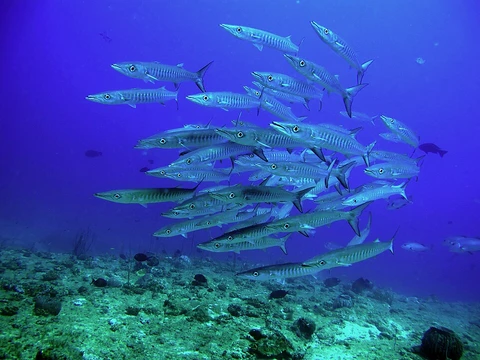
Alosa
A genus of shads known for ultrasound detection and river spawning.
Alosa is a genus of fish in the family Alosidae, often called river herrings or shads. What sets them apart from other herrings is their deeper bodies and their habit of spawning in rivers. These fish turn up on both sides of the Atlantic, around the Mediterranean, and in the brackish waters of the Caspian Sea and Black Sea basin. While many migrate from the sea into fresh water to reproduce, a few populations live their whole lives in landlocked freshwater.
In terms of looks, Alosa species tend to have dark backs and heads, often with blue, violet, or greenish tones, though some are grey or green. Many have spots behind the head, and fin colors vary by species and individual. Most weigh 300 grams or less, but *A. pontica* and *A. fallax* can reach 2 kilograms, and *A. alosa* can top 3 to 4 kilograms.
Biologically, shads are thought to be the only fish that can detect ultrasound—sounds above 20 kHz, beyond human hearing. This was first noticed in blueback herring and later confirmed in American shad, and it likely helps them avoid dolphins that use echolocation to hunt. Alosa species are generally pelagic, schooling fish that migrate. Most are anadromous or semianadromous, except for the landlocked ones. Males usually mature about a year before females, and spawning happens from late spring to summer. Most adults die soon after spawning. These fish seem adaptable, living in a wide range of temperatures and water types.
Their life cycle involves big challenges. Since they are mostly anadromous, they must navigate barriers and different waters to reach spawning grounds or the sea. Estuaries are key parts of these migrations, offering shifting conditions like changing salt levels, food sources, and predators. Because many adults die after spawning, only the young typically head to sea. How long the migration takes varies, and it can strongly affect survival.
Reproduction depends on the species. Studies in Iranian waters show spawning timing, location, and water temperature differ widely. Spawning can happen from April to August, in water from about 11 to 27 °C. A female may produce anywhere from 20,000 to 312,000 eggs, which are pelagic. Geography and temperature are important for egg and young fish development. Lifespan can reach 10 years, but that's rare since many die after spawning.
The systematics and distribution of Alosa are complicated. The genus l
- field
- Ichthyology
- known_for
- Ultrasound detection ability; anadromous spawning; diverse species across Atlantic, Mediterranean, Caspian, and Black Sea basins
- weight_range
- Most species 300 g or less; A. pontica and A. fallax up to 2 kg; A. alosa can exceed 3–4 kg
- lifespan
- Up to 10 years, but generally uncommon as many die after spawning
- fecundity
- 20,000 to 312,000 eggs per female
Lore & Background
Alosa species are generally dark on the back with blue, violet, or greenish tints, and many have spots behind the head. They are pelagic, migratory, and schooling fish. Males usually mature about a year before females, spawning in late spring to summer. Most individuals die shortly after spawning. Shads are thought to be unique among fishes in having evolved the ability to detect ultrasound (frequencies above 20 kHz), first discovered in blueback herring and later verified in American shad. This ability is thought to help them avoid dolphins that use echolocation to find prey.
Alosa species face various obstacles to survival due to their anadromous life cycle, including barriers such as dams and variable estuarine conditions. Spawning varies by species, occurring from April to August in waters ranging from about 11 to 27 °C. Eggs are pelagic. The systematics of the genus are complex, with many taxa being migratory and a few landlocked. Morphology is liable to adapt to changing food availability, and hybridization may be a factor in shad phylogeny.
Reader's Guide
Alosa shads hold ecological and cultural significance. They are a key component of river and coastal ecosystems, serving as prey for larger fish and dolphins. Their unique ability to detect ultrasound distinguishes them among fishes and provides insight into evolutionary adaptations to predation. Many species are anadromous, making them vulnerable to habitat fragmentation from dams, pollution, and overfishing, which have caused population declines. Management efforts have called for more conservative regulations to reduce fishing mortality. In Virginia state politics, shad serve a peculiar symbolic role, with an annual shad planking event held in Wakefield during gubernatorial election years. The American shad is also the focal point of John McPhee's book The Founding Fish. Culinary use of shad roe is a seasonal specialty, particularly in spring when females migrate up rivers to spawn.
Did You Know?
- Shads are thought to be unique among fishes in having evolved the ability to detect ultrasound at frequencies above 20 kHz.
- Most Alosa species weigh 300 g or less, but A. alosa can exceed 3–4 kg.
- Fecundity in Alosa species can range from 20,000 to 312,000 eggs.
- Several fossil Alosa species are known, with a high diversity from a mid-late Miocene deposit in Pınarhisar District, Turkey.
Frequently Asked Questions
What is Alosa?
Alosa is a genus of deep-bodied fish in the herring family (Alosidae), widely known as river herrings or shads. They are set apart from other herrings by their habit of entering rivers to spawn rather than reproducing in open water.
What makes Alosa different from other herrings?
Beyond their noticeably deeper body shape, Alosa species are defined by their anadromous spawning cycle, moving from saltwater into freshwater rivers to lay eggs. A few populations are fully landlocked and spend their entire lives in rivers or lakes without ever touching the sea.
Where can you find Alosa in the wild?
These shads are found on both sides of the Atlantic, throughout the Mediterranean, and in the brackish waters of the Caspian and Black Sea basins. Their range covers a wide variety of coastal, estuarine, and riverine habitats.
How do Alosa reproduce, and how many eggs do they produce?
Most species travel upstream from the sea into rivers to spawn, with a single female releasing anywhere from 20,000 to over 300,000 eggs. Many individuals die after that spawning event, though some can survive up to roughly ten years.
How large do Alosa species get?
The majority of species stay at 300 grams or under, but A. pontica and A. fallax can push toward 2 kg. The European shad (A. alosa) is the largest member of the genus, occasionally exceeding 3–4 kg.
More in Fish And Marine Life 1-23
Spotted an error? Know more?
This is a living reference — every entry is fact-audited, and reader corrections feed straight into our audit queue. Suggest an edit · See this site's audit record