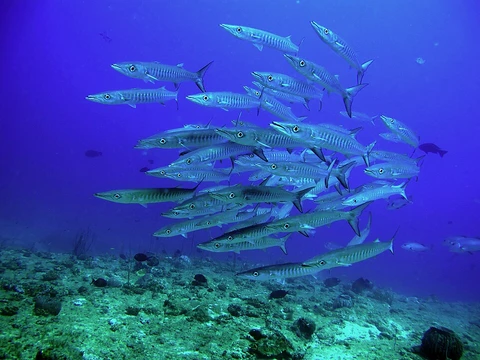
Antarctic fishes
Cold-adapted fish with unique blood and antifreeze adaptations.
Antarctic fishes are a diverse group of species inhabiting the Southern Ocean, adapted to extreme cold. They are notable for their unique physiological traits, such as antifreeze glycoproteins and, in some species, the complete loss of hemoglobin, making them a key subject for studying adaptive radiation.
- field
- Marine biology, evolutionary biology
- known_for
- Antifreeze glycoproteins, hemoglobin loss, adaptive radiation
- largest_species
- Antarctic toothfish (up to 2 meters)
- smallest_species
- Harpagifer (10 cm)
- dominant_family
- Nototheniidae (cod icefishes)
Lore & Background
Antarctic fishes belong to relatively few families, the most species-rich being Liparidae (snailfishes) and Nototheniidae (cod icefishes). The latter is part of the suborder Notothenioidei, which also includes non-Antarctic families. These fish generally have rounded pectoral and pelvic fins, medium eyes set toward the top of the head, and a large mouth. Their coloring ranges from light to dark gray, with some species being tan, green, or red. Channichthyids are the largest at up to 75 cm, while Harpagifer are the smallest at 10 cm.
Notothenioids dominate Southern Ocean diversity and biomass due to pelagization—colonizing the water column despite lacking swim bladders. They achieve neutral buoyancy by reducing skeletal minerals and increasing body lipids. Antifreeze glycoproteins (AFGPs) allow survival at −1.86 °C by binding to ice crystals; these evolved from a pancreatic trypsinogen gene. Some species lack heat shock protein expression, a trait linked to extreme cold. Channichthyids, or icefish, lack hemoglobin and erythrocytes, relying on increased heart output and blood volume instead.
Distribution varies by family: Artedidraconids and Bathydraconids are deep-sea dwellers; Channichthyids are found around Antarctica and South America; Harpagiferids inhabit the Southern Ocean and other regions; Nototheniids are coastal around Antarctica. Lifespan is about ten years, with sexual maturity at 3–4 years. Spawning occurs in fall or winter in seasonal ice habitats, or summer and fall in Antarctic zones. Eggs are guarded and have a five-month incubation; larvae hatch in advanced stages.
Reader's Guide
Antarctic fishes are significant for their extreme adaptations to cold, including antifreeze glycoproteins and hemoglobin loss, which are unique among vertebrates. They provide a model for studying adaptive radiation, as notothenioids rapidly diversified from a common ancestor in the isolated Southern Ocean. Research using genetics, phylogeny, and paleontology has clarified their evolutionary history. Conservation concerns, particularly for the Antarctic toothfish, have required international regulation due to historical illegal fishing that once exceeded legal catches. The loss of hemoglobin in icefish, possibly linked to iron limitation or reduced blood viscosity in cold water, remains an area of ongoing study. Their ability to survive without heat shock proteins and to resist temperatures 13–18 °C above their environment further highlights their physiological uniqueness. These fish occupy diverse niches—benthic, semipelagic, cryopelagic, and pelagic—and their buoyancy adaptations allow them to exploit the water column efficiently. Overall, Antarctic fishes are a key group for understanding evolution under extreme conditions and the ecological consequences of climate change.
Did You Know?
- Some Antarctic fish, like the mackerel icefish, lack hemoglobin and have colorless blood, a feature unique to the region.
- Antifreeze glycoproteins in notothenioids bind to ice crystals and are recycled through the bloodstream to the liver.
- The Antarctic toothfish can grow up to two meters and inhabit depths from 100 to 3,000 meters.
- Notothenioids achieve neutral buoyancy without swim bladders by reducing skeletal minerals and increasing body lipids.
Frequently Asked Questions
What are Antarctic fishes?
Antarctic fishes refer to a diverse assemblage of species living in the frigid waters of the Southern Ocean surrounding Antarctica. They have evolved remarkable physiological specializations that allow them to thrive in one of the coldest marine environments on the planet.
What makes Antarctic fishes' blood so unusual?
Many species synthesize antifreeze glycoproteins that stop ice crystals from forming in their tissues, while certain icefish lineages have lost hemoglobin altogether, leaving their blood pale and translucent. These combined traits make them one of the most physiologically distinctive fish groups known to science.
What is the largest Antarctic fish?
The Antarctic toothfish (Patagonian toothfish) holds that title, growing to roughly two meters in length. It is the biggest member of the Nototheniidae family and also a commercially harvested species in the region.
What is the smallest Antarctic fish?
Members of the genus Harpagifer represent the tiniest Antarctic fish, reaching only about 10 centimeters. Despite their modest size, they belong to the same cold-adapted Nototheniidae lineage as their much larger relatives.
Why are Antarctic fishes important to evolutionary biology?
They serve as a premier natural laboratory for studying adaptive radiation, since the Nototheniidae family has diversified into an extraordinary range of body forms and ecological niches over a relatively brief evolutionary window. Their unusual biochemistry also provides insights into protein function and climate resilience that extend well beyond marine science.
More in Fish And Marine Life 1-23
Spotted an error? Know more?
This is a living reference — every entry is fact-audited, and reader corrections feed straight into our audit queue. Suggest an edit · See this site's audit record