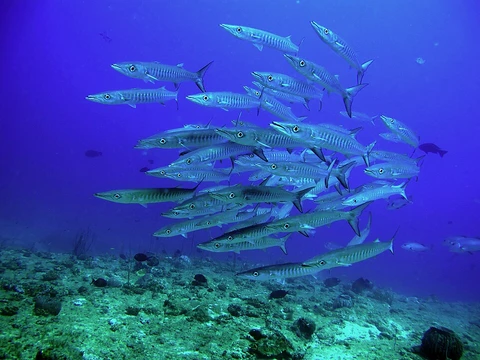
Tropical fish
Fish from tropical waters, often kept in aquariums.
Tropical fish live in warm, aquatic environments near the equator, and the term describes these fish generally rather than placing them in any specific scientific group. Many people keep them in home aquariums, both freshwater and saltwater. Their vivid colors, which come from pigmented and iridescent cells, make them popular choices for display.
In the aquarium trade, "tropical fish" usually refers to species kept in heated tanks. Freshwater tropical fish are far more common than saltwater ones, mainly because fresh water from a tap is easy to get, while salt water must be mixed from fresh water and sea salt. Saltwater tanks also need careful monitoring to keep the salinity stable, since evaporation changes the concentration; freshwater tanks can simply be topped off. Most freshwater tropical fish sold today come from fish farms in Asia and Florida, where warm temperatures make large-scale production cheap. This mass production keeps prices low, making them the most popular group for aquarists. Some species, however, are hard to breed in captivity and are still caught in the wild, which makes them more expensive. Among captive-bred fish, arowanas and flowerhorn cichlids are the priciest freshwater types, though some male flowerhorns are sterile due to extensive crossbreeding.
Saltwater tropical fish are usually wild-caught, mostly from coral reefs around the world. Only a few marine species are regularly bred in captivity. Their higher price and the difficulty of keeping them alive in tanks make them less popular than freshwater fish, but their even more vivid colors, patterns, and behaviors still attract many hobbyists. Advances in filtration technology, growing knowledge about marine care, and an increasing number of aquarium-bred species are slowly boosting their popularity.
Many marine tropical fish that interest fishkeepers live in or near coral reefs. These reefs form complex ecosystems with tremendous biodiversity, and the fish there are especially colorful. Hundreds of species can share a small area of healthy reef, many hidden or well camouflaged. Reef fish have developed many specialized survival strategies. Some scuba divers keep lists of the fish they see while diving in tropical marine areas. Coral reefs cover less than 1% of the world’s ocean surface but provide a home for 25% of all marine fish species—a sharp contrast to the open water th
- field
- Aquarium keeping, marine biology
- known_for
- Bright coloration, popularity in heated aquariums, biodiversity in coral reefs
Lore & Background
Tropical fish are not a taxonomic group but a general term for fish found in tropical aquatic environments, particularly those kept in aquariums. Freshwater tropical fish are more commonly kept than saltwater tropical fish due to the common availability of fresh water sources, such as tap water, whereas salt water is not commonly available and has to be recreated by using fresh water with sea salt additions. Salt water has to be monitored to maintain the correct salinity because of the effects of evaporation. Freshwater tropical aquariums can be maintained by simply topping up with fresh water.
Most fish sold as tropical fish are freshwater species, generally bred from fish farms in Asia and Florida where tropical temperatures make commercial production more viable. Mass production has led to many inexpensive fish. Some species are difficult to breed in captivity and are sourced from the wild, making them more expensive. Among bred-in-captivity species, the most expensive freshwater species include arowanas and flowerhorn cichlids; some male flowerhorns are sterile due to many cross breedings.
Marine tropical fish are generally sourced from the wild, usually from coral reefs, as only a few species have been successfully bred in captivity with regularity. Their higher price and difficulty in keeping them alive make them less popular, though advances in filtration technology and increasing knowledge are gradually raising their popularity. Coral reefs, which occupy less than 1% of the world's oceans, provide a home for 25% of all marine fish species. Loss and degradation of coral reef habitat, increasing pollution, and overfishing are threatening the survival of coral reefs and associated reef fish.
Reader's Guide
Tropical fish hold significance as a major component of the aquarium hobby and as indicators of coral reef health. Freshwater tropical fish, due to their low price and ease of keeping, are the most popular group of fish among aquarists. Their mass production from farms in Asia and Florida has made them widely accessible. Saltwater tropical fish, though less commonly kept, are valued for their vivid colors, patterns, and behavior, and their popularity is gradually increasing with better filtration technology and more captive-bred species. The term 'tropical fish' encompasses both wild-caught and captive-bred individuals, including those selectively bred for special features like long fins or albino coloration, as well as hybrids. Coral reef tropical fish represent a significant portion of marine biodiversity, with hundreds of species existing in small areas of healthy reefs. However, the survival of these fish is threatened by habitat loss, pollution, and overfishing, including destructive fishing practices. The legacy of tropical fish includes their role in recreational scuba diving, where divers keep lists of observed species, and their importance in highlighting the fragility of coral reef ecosystems.
Did You Know?
- The term 'tropical fish' is not a taxonomic group but a general term for fish found in tropical aquatic environments.
- Freshwater tropical fish are more commonly kept than saltwater tropical fish due to the common availability of fresh water sources such as tap water.
- Coral reefs occupy less than 1% of the surface area of the world oceans yet provide a home for 25% of all marine fish species.
- Some male flowerhorn cichlids are sterile due to many cross breedings.
More in Fish And Marine Life 1-23
Spotted an error? Know more?
This is a living reference — every entry is fact-audited, and reader corrections feed straight into our audit queue. Suggest an edit · See this site's audit record